ohh interesting, will it let me take few seconds off my times down the Friston Trails......
"Of all the stories you told me, which ones were true and which ones weren't?"
"My dear Doctor, they're all true."
"Even the lies?"
"Especially the lies."
MingtheMerciless wrote: Thu Apr 17, 2025 9:24 am
ohh interesting, will it let me take few seconds off my times down the Friston Trails......
Well from what i've seen the theory is 1s per minute. Which isn't a lot admittedly, but this weekend gone that could have pushed him from 16th to 9th in Nationals. Fort William it could be 4s per run... which again is massive in his world
Hmmm, that would put me in KOM territory for a couple of segments....
Keep me updated.
"Of all the stories you told me, which ones were true and which ones weren't?"
"My dear Doctor, they're all true."
"Even the lies?"
"Especially the lies."
Mr. Dazzle wrote: Thu Apr 17, 2025 2:34 pm
Not entirely snake oil, idea comes from F1. Well it actually comes from an academic at Cambridge Uni, it was merely applied first in F1.
Mr. Dazzle wrote: Thu Apr 17, 2025 2:34 pm
Not entirely snake oil, idea comes from F1. Well it actually comes from an academic at Cambridge Uni, it was merely applied first in F1.
Whuch is fine. But I am not sure how those small gains really make a huge difference on a downhill MTB
The "aggregation of marginal gains" is a concept championed by Sir Dave Brailsford, who led the British cycling team to dominance, including winning 16 gold medals in the 2008 and 2012 Olympics. This theory focuses on making small, incremental improvements in many areas, believing that even 1% improvements in various aspects can collectively lead to significant overall performance gains.
Mr. Dazzle wrote: Thu Apr 17, 2025 2:34 pm
Not entirely snake oil, idea comes from F1. Well it actually comes from an academic at Cambridge Uni, it was merely applied first in F1.
Whuch is fine. But I am not sure how those small gains really make a huge difference on a downhill MTB
The "aggregation of marginal gains" is a concept championed by Sir Dave Brailsford, who led the British cycling team to dominance, including winning 16 gold medals in the 2008 and 2012 Olympics. This theory focuses on making small, incremental improvements in many areas, believing that even 1% improvements in various aspects can collectively lead to significant overall performance gains.
S'just a version of 'kaizen' innit?
(Which was actually initiated in post-war Japan by....America).
Mr. Dazzle wrote: Thu Apr 17, 2025 2:34 pm
Not entirely snake oil, idea comes from F1. Well it actually comes from an academic at Cambridge Uni, it was merely applied first in F1.
Count Steer wrote: Thu Apr 17, 2025 4:31 pm
S'just a version of 'kaizen' innit?
(Which was actually initiated in post-war Japan by....America).
Co. I worked at had some odd, similar-sounding system for stock control.
Visitors who knew all about best-practice production methods were usually confused, they didn't know about it!
Someone made it up.
But then, products were sometimes named after Magic Roundabout characters ...
Kaizen is one of those things that seem blindingly obvious - with hindsight.
If you fix all the small things, the big thing runs better. So, something like the Toyota Production System didn't worry about whether making cars was the right thing to do, just how to do it 'better' where 'better' can be cheaper, faster, more profitably, higher 'quality' etc. In the Japanese case it was 'all the above'.
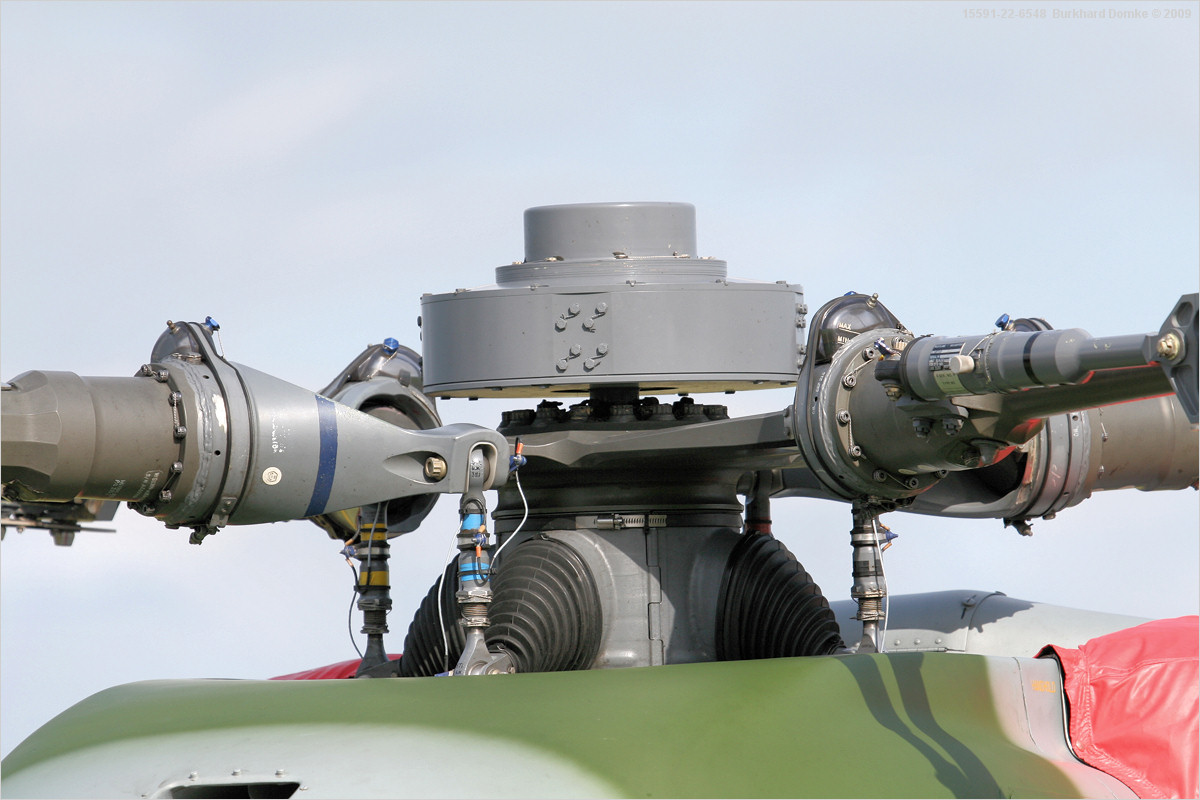
This is the vibration absorber fitted to a lynx helicopter rotor head, iirc they weigh about 50kg and absorbs vibration in the same sort of way being a sprung weight, but, the big difference is that the rotor head turns at a constant rpm.
Count Steer wrote: Thu Apr 17, 2025 4:31 pm
S'just a version of 'kaizen' innit?
(Which was actually initiated in post-war Japan by....America).
Co. I worked at had some odd, similar-sounding system for stock control.
Visitors who knew all about best-practice production methods were usually confused, they didn't know about it!
Someone made it up.
But then, products were sometimes named after Magic Roundabout characters ...
Kaizen is one of those things that seem blindingly obvious - with hindsight.
If you fix all the small things, the big thing runs better. So, something like the Toyota Production System didn't worry about whether making cars was the right thing to do, just how to do it 'better' where 'better' can be cheaper, faster, more profitably, higher 'quality' etc. In the Japanese case it was 'all the above'.
Oddly, I introduced kaizan into the Japanese company I worked for ...
Mr. Dazzle wrote: Thu Apr 17, 2025 2:34 pm
Not entirely snake oil, idea comes from F1. Well it actually comes from an academic at Cambridge Uni, it was merely applied first in F1.
Whuch is fine. But I am not sure how those small gains really make a huge difference on a downhill MTB
The "aggregation of marginal gains" is a concept championed by Sir Dave Brailsford, who led the British cycling team to dominance, including winning 16 gold medals in the 2008 and 2012 Olympics. This theory focuses on making small, incremental improvements in many areas, believing that even 1% improvements in various aspects can collectively lead to significant overall performance gains.
I am sure the little packages that were being slipped to various riders had nothing to do with it!
Or no more than any other cycling team!
Horse wrote: Thu Apr 17, 2025 4:10 pm
The "aggregation of marginal gains" is a concept championed by Sir Dave Brailsford, who led the British cycling team to dominance, including winning 16 gold medals in the 2008 and 2012 Olympics.
British Cylcing love to parrot this, like they came up with the idea
I had loads of BC tech guys try to explain it to me, like we hadn't been using that thinking in F1 and the like for 3 decades prior.
BTW 1s gain per minute would be LOADS in F1. Almost unheard of to get that sort of gain from one change.
Horse wrote: Thu Apr 17, 2025 4:10 pm
The "aggregation of marginal gains" is a concept championed by Sir Dave Brailsford, who led the British cycling team to dominance, including winning 16 gold medals in the 2008 and 2012 Olympics.
British Cylcing love to parrot this, like they came up with the idea
I had loads of BC tech guys try to explain it to me, like we hadn't been using that thinking in F1 and the like for 3 decades prior.
BTW 1s gain per minute would be LOADS in F1. Almost unheard of to get that sort of gain from one change.
Not to mention that some marginal gains in one respect can have negative impacts in another. eg that mass damper comes with a weight penalty. Possibly not a biggie in DH but the mass is carried quite high.
It's often a case of change one thing then chase out the negative impacts on other bits of the whole.
And here it is... Ready to be installed and then suspension setup using Data Acquisition this weekend. I would call it Telemetry but i'm sure someone would tell me it's not as that has to be read on the fly otherwise it's not telemetry
The data is taken after each run when back at the bottom and analysed and then changes made
And here it is... Ready to be installed and then suspension setup using Data Acquisition this weekend. I would call it Telemetry but i'm sure someone would tell me it's not as that has to be read on the fly otherwise it's not telemetry
The data is taken after each run when back at the bottom and analysed and then changes made